The FDA warned Mars Petcare a roach infested pet food plant is a "regulatory violation", but then the agency just walked away taking no enforcement action. This is typical of what happens within the big pet food industries and why you can't trust them. It's like the fox guarding the hen house.
Here's a one minute video message from our pet food advocate, Susan Thixton with TruthAboutPetFood.com:
Showing posts with label Pet Food. Show all posts
Showing posts with label Pet Food. Show all posts
Wednesday, July 25, 2018

Thursday, July 19, 2018
Pet Food Consumer Alert from FDA

The FDA issued the following pet food consumer alert on July 12, 2018:
The U.S. Food and Drug Administration is alerting pet owners and veterinary professionals about reports of canine dilated cardiomyopathy (DCM) in dogs eating certain pet foods containing peas, lentils, other legume seeds, or potatoes as main ingredients. These reports are unusual because DCM is occurring in breeds not typically genetically prone to the disease. The FDA’s Center for Veterinary Medicine and the Veterinary Laboratory Investigation and Response Network, a collaboration of government and veterinary diagnostic laboratories, are investigating this potential association.
Early reports state that the dogs consistently ate these foods as their primary source for months or years. Does your dog's food contain these items listed early in the list of ingredients? Time to change food!
Canine DCM is a disease of a dog’s heart muscle and results in an enlarged heart. DCM often results in congestive heart failure. Heart function may improve in cases that are not linked to genetics with appropriate veterinary treatment and dietary modification, if caught early.
For more details about this warning please check out our pet food consumer advocate Susan Thixton's article by going here: https://truthaboutpetfood.com/fda-investigates-potential-connection-to-diet-and-heart-disease-in-dogs/
In this article Susan also reminds us of how pea protein, pea starch and pea fiber actually got put into pet foods in the first place. Thanks for all you do in advocating for healthier pet foods, Susan!
UPDATE 8/10/18: The FDA has provided an update to their investigation into a potential link between diet and heart disease in dogs and also answer some frequently asked questions.
Wednesday, June 27, 2018
Pets and GMOs
As a huge proponent of living and eating healthy, including organic and non-GMOs for us and our pets, I am so glad that one of the well known experts on GMOs, Jeffrey Smith, with The Institute of Responsible Technology, has created a website PetsandGMOs.com. He created the short 10 minute movie below too. Check it out!
Jeffrey Smith also produced the documentary about GMOs called Genetic Roulette, which came out about 5 years ago. I highly recommend this documentary to anyone to hasn't seen it. It's available to rent, buy or you can find it on YouTube for free.
If you visit the Pets and GMOs website and sign up for their emails and updates you will receive a free gift -- The Pet Food Guide, a list of the best organic and non-GMO dog and cat foods! This list can help you navigate through the maze of pet foods in finding some of the healthiest organic and non-GMO brands to buy.
I downloaded my copy of The Pet Food Guide and the foods I've been buying for my own pets (other than what I make myself) are on there. Are yours? If not, for your pets' sake, you may want to seriously consider switching to some of these brands.
Wednesday, May 16, 2018
Are Your Pets Eating Food Coloring?
Learning how to read the labels on pet food is one of the best things you can do for your pet.
For instance, do you buy those "colorful" foods because you think it will be tastier or better for your pets? Better think again! It's just a marketing ploy to get you to buy it. The colors are for your benefit. Pets don't care what color their food is; besides, studies have shown that they don't see the same color spectrum as we do.
Do you know what you're really feeding your pet(s)?
For instance, do you buy those "colorful" foods because you think it will be tastier or better for your pets? Better think again! It's just a marketing ploy to get you to buy it. The colors are for your benefit. Pets don't care what color their food is; besides, studies have shown that they don't see the same color spectrum as we do.
Do you know what you're really feeding your pet(s)?
Monday, March 26, 2018
The Truth About Pet Cancer Docu-Series

Losing several pets to cancer myself, I know the pet cancer epidemic is real. Our pets don't know how to protect themselves, so it's up to us to become educated pet guardians to help them live the healthiest lives possible.
Did you know …
- In the 1970’s, Golden Retrievers on average would live to be 17 years old. Now, they average only 9 years.
- Just 50 years ago only 1 in 100 dogs got cancer. Now, it’s worse than 1 in 2 dogs will be diagnosed with cancer this year. That's a ridiculous statistic.
- Cancer is the leading cause of death among cats. In fact, 1 in 3 cats will be affected by this devastating disease this year alone.
- So when I found out that Truth About Cancer were running a series about cancer in our pets, I wanted to tell you about it.
The Truth About Pet Cancer is a great docu-series which discusses in detail how to AVOID your pet getting cancer as well as what to do if your pet already has cancer. It includes interviews with over 30 Pet Health Experts including world-renowned veterinary oncologists, holistic veterinarians, and animal health specialists, just to name a few.
The Truth About Pet Cancer is available to watch for FREE! It begins Wednesday, April 4, 2018 at 8 PM Central and airs 7 (one hour) episodes in 7 days. Each episode is available for viewing for only 24 hours, for free.

Sign up now to get your link to watch it for FREE starting April 4th! Watch the trailer here.
Go here to watch a 20 minute Sneak Peek of The Truth About Pet Cancer.
Check out their Facebook page here.
This is the second documentary series about cancer in pets that has come out just recently. Read about the other one here.
Cozy Critters has purchased this must-see 7 part documentary on DVD so that we can share it with as many of our clients as possible. We want all pet lovers and veterinarians to see this! Ask us about borrowing the DVD set so you can watch:
Episode 2: The Pet Food Industry, Healthy Diets,
Episode 4: Pet Cancer Causes, Silent Killers & Recurrent
Episode 5: Cancer Roots and Remedies, Hidden Hazards,
Episode 6: Treatments & Preventions: Part 1 –
Episode 7: Treatments & Preventions: Part 2 – Eastern Medicine,
This is the second documentary series about cancer in pets that has come out just recently. Read about the other one here.
 |
UPDATE (4/9/18): A Special Offer for Our Clients!
Cozy Critters has purchased this must-see 7 part documentary on DVD so that we can share it with as many of our clients as possible. We want all pet lovers and veterinarians to see this! Ask us about borrowing the DVD set so you can watch:
All 7 Truth-Revealing 65-Minute Episodes
Episode 1: Understanding Pet Cancer & the Current “Medical Toolkit”
Episode 2: The Pet Food Industry, Healthy Diets,
Ketosis & Nutrigenomics
Episode 3: Pet Vaccines – “Do’s & Don’ts”
Episode 4: Pet Cancer Causes, Silent Killers & Recurrent
Epigenetic Triggers
Episode 5: Cancer Roots and Remedies, Hidden Hazards,
Healing Tones & Detox
Episode 6: Treatments & Preventions: Part 1 –
Healing Herbs, Homeopathy & Other Proven Protocols
Episode 7: Treatments & Preventions: Part 2 – Eastern Medicine,
Supplementation, Surviving & Thriving
Wednesday, March 14, 2018
How You Store Kibble Matters

I am not a proponent of dry food to begin with (the more I've learned, the less I like it), but some of the ways in which I see people storing dry pet foods are less than ideal. How you store your pet's dry food does matter.
Dry pet foods (which by the way, are technically and legally considered feed not food) are highly processed. Because they are highly processed and use preservatives, they are packaged and stored in bags that are intended to keep them as fresh as possible until the expiration date or shelf life, which can be between one and three years. (Always check the expiration or "best by" date.)
Some of the dietary fats in dry kibble -- fats that pets require -- are very sensitive to air, heat and time. As soon as a bag of kibble is opened, those fats begin to go rancid. Pouring the kibble from the bag to a container, or into a bowl accelerates the process as the kibble is exposed to more air each time. The more exposure to air or heat, the quicker the fats will go rancid.
In addition to that, in the final step of the kibble production process, palatability enhancers are sprayed on the food (because few animals would eat it otherwise), which consist of metal oxides and sulfates that promote the oxidation of fats.

Most bags of dry food have either a plastic or foil liner on the inside of the bag for this reason. The packaging is protecting the food from air (oxygen), heat and moisture. No matter what type of preservative is used in your pet's kibble, it can quickly turn rancid if exposed to air and hot temperatures. Dry pet foods are supposed to be stored in a cool (under 80 degrees), dry place, which (especially here in the South) does not mean the garage.
Sometimes there is the issue of bugs getting into the food which is why people began putting the food in other containers to store it. But instead of pouring the food out of the bag into a container, it's much better to leave the food in the bag and put the bag in a container. It will stay fresher this way. Remember, each time you expose the food/feed to air, the quicker the fats become rancid.
I have seen dry pet food stored in all kinds of containers. The most popular is plastic of course. What most people don't think about is whether or not the plastic your storing the food in is even food grade plastic. The food items we buy for ourselves as well as pet foods, are stored in food grade plastics. Are you using food grade containers to store your pets' food?
Even so, most (if not all) plastics can leach toxic chemicals into the contents of the container. (Which is why after learning this I stopped using plastic for food storage altogether.) Also, some plastics can actually absorb much of the vitamin C out of the food; it leaches out and gets sucked into the plastic material. This effects shelf life as it causes the fat to oxidize and accelerates spoilage. Another reason to leave it in the bag.

Bisphenol A (BPA) is a chemical that can be found in many plastic containers, including food-grade plastics. BPA has been shown in several medical studies to be harmful and may even cause cancer. BPA has been linked to thyroid and neurological problems.
And if you think you're out of the woods by getting BPA-free plastic, better think again. Studies have found that some BPA-free plastics have similar estrogenic activity as plastics with BPA, which cause adverse health problems.
Another reason to leave it in the bag.
Another two important reasons why keeping it in the bag is a good idea: One is that the bags, which were made specifically to keep the food fresh as possible for as long as possible, would likely keep the food fresher longer than it would after being poured into another container (letting air in), which is likely to allow for more space (air) as the food level gets lower. A bag you can roll down to keep the air out! Two: In case of a recall of the food. If your pet ever gets sick and you suspect the food (or treats), you will need the product information code and expiration date on the package. Or if there is a recall on the food you buy, you will need to know the information on the packaging. This is important! Pet food recalls happen on a frequent basis.
You can follow Cozy Critters Facebook page to get notices of pet food or treat recalls.
 Buying too much dry food at a time might save you a few dollars or a few trips to the store, but it may also be causing your pet's food to go rancid quicker. Just how long does that bag last? (More than seven days?) Does it last so long it's most likely stale or rancid once you get to the bottom of the bag because it's been opened and exposed to air so many times? You might want to consider buying in smaller quantities so it's always as fresh as possible. If not, be sure to at least keep the bag closed tightly after letting the air out.
 If you ever notice that the food looks or smells funny, don't feed it to them. Better safe than sorry. You may not even notice anything different when a food has actually turned rancid. If your pet refuses to eat something, don't make them. Animals can sometimes smell when there is something "off" with the food and know not to eat it. We forget sometimes to give more credit to the animals.Their sense of smell is much more powerful than ours!
If you continue pouring your dry pet food in a plastic container, at least be sure to wash it out and dry it thoroughly before putting a new refill of food in. If you dump new, fresh food on top of remnants of old, rancid food, those remnants of oxidizing old food can spread the oxidation to the new food.
We need to be more conscious of how we store our pets' food in order to help them stay healthy. How you store their kibble matters.
Friday, July 7, 2017
More Pet Food Testing (Again)

And we know that it has been discovered that the high heat processing that occurs in the manufacturing of dry kibble actually creates two carcinogens -- acrylamide and heterocyclic amines. These won't be listed in the ingredients of the food of course, because they are created in the process itself and are not ingredients. We know that carcinogens cause cancer.
(And I'm not even mentioning a whole host of other problems with pet food ingredients that I've written about on numerous occasions.)
Now we have a report that just came out by The Ecology Center's Healthy Stuff about the testing they have done on the different toxic chemicals in the coatings of pet can foods. (They also did a larger test on can foods for people.) And as you can imagine, it's not good.
"We know that safer substitutes for BPA and PVC are widely available,” said Lauren Olson, science campaign director with the Ecology Center. “Last year consumer pressure led to Campbell’s and Del Monte making a commitment to phasing out BPA from all their cans. We’re calling on pet food companies to follow their lead and remove these harmful chemicals from their products.”Their press release states "The Ecology Center will reach out to the major manufacturers of the canned pet food tested asking them to make a commitment to safer substitutes in their can linings." I hope they do. We need to put the consumer pressure on the pet food makers the same way. Your voice and your action is needed. Our pets are being poisoned. This is unacceptable -- whether it's the BPA or PVC in the can linings or the list of heavy metals, GMOs and other toxins (like phenobarbital) in the food itself.
There seems to be a few pet food manufacturers who are ahead of this issue and now offer or have been offering plastic tubs instead of cans. But what chemicals are in the plastic the tubs are made out of that may leach into the food? We know that different plastics leach different toxic chemicals into foods as well. (I stopped using plastic containers for food storage when I learned this.) Would the (possible) toxins from the plastic tubs of food be less toxic than the chemicals like BPA and PVC in the can linings? One can only hope so! (Until those are tested!)
It's pretty sad that we have to choose between which toxin is worse. And that we have to have everything not only tested, but we have to be sure it's tested by a laboratory that doesn't have any vested interest in the petfood business; but this is where we are. At least now there are more different types of pet food options available like frozen, refrigerated and freeze dried. Kilo still loves his homemade raw food in addition to wet foods.

Thursday, July 6, 2017
More Testing on Pet Foods

For some time now I have been warning people not to feed their pets any food or treats that contain seafoods, and for good reason -- they are loaded with heavy metals.You can read the previous articles where I wrote about pet food testing that was done back in May 2017 and Jan 2015. I also gave 9 reasons to avoid seafood cat foods in April 2016 (as if heavy metals isn't enough). But this isn't just about cat foods. This is about any pet food or treat that contains any seafood ingredient. More and more research and testing is being conducted on pet foods -- not by the pet food companies themselves of course, but by outside sources.
After reading this very disturbing but not surprising article on the subject, just released by Karen Becker, DVM, I was looking at the Clean Label Project's list of product ratings of their scientific testing on 900 pet foods and treats. I was only looking at the section on cat wet foods, but with a little investigating I discovered my suspicions were true. All of the cat wet foods that were tested and showed having less than a 5 star rating on the list (the fewer stars, the more heavy metals in them) had a fish or seafood ingredient in them. All of them. Even the ones labeled beef or chicken and duck! They either had fish in the list of ingredients, some form of seafood, or fish oil or dried kelp.
It's worth mentioning here that when I have gone to a pet supply store to buy wet cat food and read the list of ingredients on different foods, I discovered that the pet food manufacturers are putting fish or other seafood ingredients in many of the foods without mentioning it at all on the front of the label. In fact, it's very misleading. You think you are getting a "chicken" only or a "beef" only food for example, because that's what it states on the front of the can, but if you actually read the list of ingredients, you will find fish in there! And usually it's one of the first 5 ingredients. So if you don't read ingredients, you could very well be feeding your pets seafoods or fish (and therefore heavy metals) without even knowing it.

So what does this mean? Unfortunately it means that you must read the ingredients of every pet food and treat you buy. And if there is any type of fish, fish oil, dried kelp or any other form or derivative of seafood in the list of ingredients, don't buy it! DON'T BUY IT! You will be slowly poisoning your pets with heavy metals such as lead, mercury, arsenic, cadmium, and others if you feed these types of foods and treats to your beloved pets. And if you are already feeding them these foods, stop! Please. And if you give your pets any type of supplement like fish oil or dried kelp and it's not certified organic with the seal of The Non-GMO Project Verified, then you can be sure that they contain toxic heavy metals. (USDA Certified Organic has no limits when it comes to heavy metals.) A safer alternative to generic fish oil or salmon oil is (sustainably harvested) krill oil.
I'm with Dr. Becker - the safe amount of any toxin or heavy metal should be 0 ppm.
Please read this article by Dr. Becker:
Busted: 55 Times Worse Than Giving Your Pet Water From Flint, Michigan

Monday, May 1, 2017
Food Forensics

I just finished reading Food Forensics (2016) by Mike Adams, founder and Science Director of the CWC Labs, and although the book primarily has to do with the toxins that were found via laboratory testing, and how to avoid them in human food, there was testing done on some pet treats that are worth mentioning.
- High amounts of lead were found in popular pet treats made in China. A good reason to read the fine print on the back of packages to make sure it says "Made in the USA". (China has worse problems with heavy metals in the soil and foods than we do in the US, and it's pretty bad here. I warned about treats made in China back in 2012. Remember the largest pet food recall in 2007 that killed thousands of pets? Ingredients sourced from China!)
- Fish treats for cats contained large amounts of cadmium. Fish and other seafoods are known to contain toxic heavy metals. I wrote more extensively on this in 9 Reasons Why You Should Avoid Seafood Cat Foods. They also sell dog foods and treats with fish so the dangers apply to their foods and treats too (see herring strips for dogs below).
- A high level of copper was found in a sea vegetable supplement for pets. Too much copper can have detrimental health effects.
- Gourmet munchy rawhide as well as natural rawhide rings had extremely high levels of lead.
- Herring strips for dogs tested high of mercury.
- Munchy stix (for dogs) tested really high in lead.
- Freeze dried ocean whitefish cat treats were found to be high in mercury.
- Although these items were not listed under pet foods or treats per se, they can be found in some of them or sold as pet treats by themselves: an extremely high amount of arsenic was found in dried shrimp, high levels of cadmium and lead in dried whole anchovy, and also a high amount of mercury in dried shaved bonito.
Brand names are not shown for many products in the book for the simple reason that a book takes so long to publish and distribute that many products tested may have shifted in composition over that time.
Another important point to mention here is that even when buying something that is certified USDA Organic -- whether for people or pets -- know that the USDA's organic standards have no limit whatsoever on heavy metals! This is not good. That means when it comes to toxic heavy metals, even if it's labeled USDA organic, it could be loaded with them!
I highly recommend reading this very informative and eye-opening book for your own benefit as well as for your pets. Awareness is the key.

Wednesday, April 19, 2017
Pet Food Quality Resources

Did you know there are some great resources available at your fingertips when it comes to figuring out or deciphering the best quality foods and treats to buy for your pets?
One of these resources is the Cornucopia Institute, founded in 2004. You can read more about this non-profit public interest group here. They research and investigate many things, not just pet foods.

For instance, do you know what carrageenan is? Did you know that extensive peer-reviewed and published research indicates that food-grade carrageenan does in fact contain the dangerous carcinogen poligeenan in varying amounts, usually around 5%? "The fact that food-grade carrageenan contains poligeenan in any amount should be enough to ban its use in both human and pet food, considering it's well-documented carcinogenic properties, even at small doses", says the report's author. Poligeenan is widely used in cancer research to give test animals inflammation cancer, for testing cancer treatments and anti-inflammatory drugs. It causes intestinal inflammation with the potential to lead to cancer, even in small doses.
 Also, studies funded by the American Diabetes
Association have linked the consumption of food grade
carrageenan to insulin resistance and glucose intolerance.
Also, studies funded by the American Diabetes
Association have linked the consumption of food grade
carrageenan to insulin resistance and glucose intolerance.The Cornucopia Institute's research found that more than 70% of can foods contain this ingredient. Is it any wonder that inflammatory bowel disease (IBD) in cats, the most common cause of vomiting and diarrhea, has become so commonplace?
Even veterinarians agree that research reveals many references to ‘carrageenan-induced inflammation’. As one vet was quoted in the report: “Animal studies have repeatedly shown that food-grade carrageenan causes gastrointestinal inflammation and cancer at lower doses than the average daily intake. Given the high rates of colon cancer in both dogs and cats, I highly recommend removing carrageenan from your pet’s diet.”
The Cornucopia Institute also has an accompanying Pet Food Guide. Is the pet food you buy on this guide? Does it contain carrageenan? Does it contain other ingredients you want to avoid like rendering products or food dyes? Are there foods that don't contain these unwanted ingredients? Yes. Check out their handy guide here.
Thursday, April 13, 2017
Pet Food Ingredients To Avoid
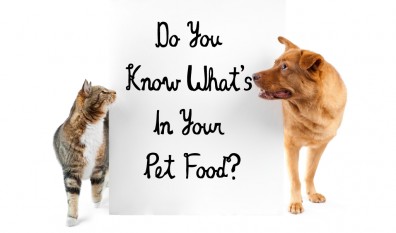
When it comes to pet foods and what we should feed our pets, we (myself included) have put our trust in those outside of ourselves, like the pet food manufacturers and veterinarians, to know what the best foods are to feed our pets because we think they are the experts on the subject. At least that's what we are led to believe. However, this is not the case.
We are bombarded with marketing and advertising on mass media, a form of brainwashing, which the pet food industry has very deep pockets to pay for. If you see certain words, pictures, phrases or jingles enough times, you will go for the familiar. They know this. They know all the tricks.
Pet food Manufacturers are in the business of making money from their products. The pet food industry violates U.S. federal food safety laws and are allowed to get away with it.
Unfortunately, the amount of pet nutrition that is taught in veterinary schools is very minute. Hopefully this will change for our future veterinarians, if it's not already. So unless they take additional years of college to get a degree in nutrition or pursue the subject of pet nutrition on their own, the only education they have in regards to pet foods is from the pet food manufacturers themselves -- the same ones whose foods they sell. And as I've written about in more detail before: this is a little biased, don't you think?
The hard reality is that we have to take responsibility and educate ourselves about what it is that we are feeding our pets. We must be proactive to protect our pet's health. I've written about some excellent books available on the subject here, here and here.
For starters, it helps to know which ingredients to avoid in pet foods and why. This means reading the ingredient list on all the foods and treats you buy. Become an educated pet food consumer. And remember: every dollar you spend speaks volumes.Wouldn't you rather support the businesses who create healthier foods and products with your animals' health more of a concern than just making a buck?
Here's a great list already provided by our pet food consumer advocate, Susan Thixton, of the "deal breaker" pet food ingredients to look out for:
http://truthaboutpetfood.com/deal-breaker-pet-food-ingredients/
I have also written in more detail about the subject of pet food ingredients here.
Monday, April 10, 2017
Top 3 Pet Food Manufacturers
When only three companies own most of the pet foods, and then one of them buys up the majority of veterinary clinics and diagnostic labs...this is very scary.
Though these big companies want to own and control everything, we have to remember that We the People have the power! We are the ones who really have the power. We can send a clear message with every dollar we spend. We can become more educated and informed about the products we buy, especially when it comes to ours and our pets' foods. We can more carefully and consciously choose what to spend our money on and support those companies and products who are of higher quality, integrity and purpose. This will create more of what we want.
There are many smaller companies out there now and new ones starting up all the time that are offering healthier and better quality products, both for us and our pets. People just like you and I are creating these companies and products because there is a real need for it. It's time to look outside the box! (The organic food industry is growing by leaps and bounds!)
We are the ones we have been waiting for. It's time to remember your power and flex those spending muscles!

Wednesday, February 1, 2017
Research Links Glyphosate to Liver Disease

There is a lot to be concerned about when it comes to pet foods as I have written about at length here -- especially GM (genetically modified) ingredients or better known as GMOs. Sadly, I still find that a lot of people have no idea what GMOs are or that they and their animals are consuming them on a daily basis and what this can do to their health. If you or your pets are consuming GMOs or (non-organic) wheat -- which when you think about it -- is in a lot of foods, you/your pets are consuming glyphosate, otherwise known as RoundUp, i.e. poison for our bodies. Sound crazy? I invite you to do the research for yourself. A good place to start is the most comprehensive source of GMO health information available on the web, which can be found at the Institute for Responsible Technology. A great article listing the top 20 GMO foods and ingredients to avoid -- and why can be found here.
What we put into ours and our pets' bodies is one of the basic keys to well-being. For so long we have had a dis-connect as to the relationship between what we/they consume and our/their state of health. We must be proactive to protect our and our pets' health.
In this recently (2017) published study in the journal Nature, the lead author stated that their findings "are very worrying as they demonstrate for the first time a causative link between an environmentally relevant level of Roundup consumption over the long-term and a serious disease".
This is some very concerning research that affects most pet food consumers (and human food consumers). Even at allowable levels (FDA and EU) this new study links the pesticide glyphosate to fatty liver disease. And should this come as a big surprise considering what glyphosate is and that it is put into our/their food supply?
In September of 2015, Dr. Anthony Samsel analyzed multiple pet foods for glyphosate and provided pet food consumers with the results, as shared in this article by Susan Thixton (TruthAboutPetFood.com): http://truthaboutpetfood.com/more-concerning-news-linked-to-glyphosate/. Also in this article Susan shares some things you can do about it as a pet owner.

Wednesday, January 11, 2017
Pet Fooled - The Movie
I just finished watching the new documentary Pet Fooled, which is about pet foods. Great documentary! I highly recommend every pet parent watch it!
Pet Fooled is now available on most digital platforms (e.g., iTunes, Hulu, Vimeo, Xbox, etc.). It will also available on cable VOD providers like Dish Network, Cox, Charter On Demand and Verizon Fios, to name a few. For further information and to watch the film:
Thursday, December 22, 2016
Prescription Pet Food Lawsuit

As I have mentioned many times, including in two recent posts (May 2016 and June 2016), there are many problems with prescription pet foods that are finally coming to the surface.
I'm sure you have noticed that people are fed up with a lot of things these days, and this includes the pet food industry, including prescription pet foods. And now finally, a couple of law firms have teamed up and are representing consumers in a class action lawsuit against the four main manufacturers of prescription pet foods -- Hill's, Purina, Royal Canin and Iams.
Have you purchased a prescription pet food in the last four years? Have you been told that your pet needed a pet food available by prescription only? Were you referred to an on-site veterinarian (Banfield, BluePearl, for example) to write the prescription, with or without the need to examine your pet?
If you answered yes to any of these questions, please call and speak with one of the lawyers at the number provided in this article, which also explains more about it.
It's up to us to speak up and speak out for the animals!
I haven't given any of our pets prescription foods in over two decades and would never consider giving them, but a lot of my clients do and have.
To read more about the class action lawsuit and how to join it, go to:
http://www.walkuplawoffice.com/Pet-Food-Fraud-Landing-Page_ppc_lp.shtml
To read Susan Thixton's (TruthAboutPetFood.com) article about the lawsuit, go here:
http://truthaboutpetfood.com/another-pet-food-lawsuit/
Please help support pet food advocacy work by going here:
http://truthaboutpetfood.com/help-support-the-truth-2/
(Update 1/9/17): To read Dr. Karen Becker's article about this lawsuit go here:
http://healthypets.mercola.com/sites/healthypets/archive/2017/01/09/prescription-pet-foods-lawsuit.aspx
SUPPORT THE TRUTH
Wednesday, October 5, 2016
Pet Fooled, The Movie
The film the pet food industry doesn’t want a world of pet food consumers to see; Pet Fooled -- coming soon. To be released January 2017. Yes! Check out the trailer below. The film just debuted at the Catalina Film Festival. It is unknown if the film will be airing in theaters but will probably be available on Pay Per View type channels beginning in early January.
"Please see the film. And for those stubborn friends and family members who still won’t listen to you about pet food…send them to this film. Pet Fooled might just be the perfect change of attitude for many," says Susan Thixton of TruthAboutPetFood.com.
Pet owners in the Washington DC area can view the film at the Utopia Film Festival October 21 – 23, 2016. Facebook users can follow information on the film by liking their Facebook page.
After you watch the trailer above, check out this quick video clip (less than 2 min.) below of Mike Adams (HealthRanger.com) being interviewed by Ty Bollinger (TheTruthAboutCancer.com) about the same subject.

"Please see the film. And for those stubborn friends and family members who still won’t listen to you about pet food…send them to this film. Pet Fooled might just be the perfect change of attitude for many," says Susan Thixton of TruthAboutPetFood.com.
Pet owners in the Washington DC area can view the film at the Utopia Film Festival October 21 – 23, 2016. Facebook users can follow information on the film by liking their Facebook page.
After you watch the trailer above, check out this quick video clip (less than 2 min.) below of Mike Adams (HealthRanger.com) being interviewed by Ty Bollinger (TheTruthAboutCancer.com) about the same subject.

Wednesday, July 13, 2016
Beneful = Bad News

After receiving thousands of complaints of sick and dead dogs linked to Beneful Dog Food over the last few years, it turns out the FDA actually did do some testing on the dog food and inspections at some of their manufacturing plants as well. But get this: They did the testing and inspections in 2013, but just released the results on their website in April 2016. Three years later. There was no public notice. If it wasn't for our pet food advocate Susan Thixton (TruthAboutPetFood.com) "finding" this information on the FDA's website and making us aware of it, I wouldn't even be telling you this.
What their reports say are disturbing. For one thing, I'm sure you will be horrified to know that they found the same ingredients in Beneful that were in the foods that caused the largest and deadliest pet food recall in our history (2007), killing thousands of pets. And this is just the beginning. I'm not going to tell you everything they found because Susan Thixton has already done so in her article here:
http://truthaboutpetfood.com/fda-releases-concerning-information-about-beneful/
This company shouldn't be in business, yet dogs are still being fed this poison. And unless you stay informed by someone who keeps up with this stuff or someone who is always surfing the FDA's website, you wouldn't know any better. The FDA releases the information in such a way so as not to bring any attention to it or to let anyone even know about it, but yet if asked about it, they can say that it's right there in public view for anyone to see. You mean you didn't know about it? (Duh.)
They think we are stupid. They don't care about your animals. All they care about is that you keep buying their products which earns them millions. Read the reports. Decide for yourself.
I would never recommend this food to begin with, just based on the ingredients; and then you add all of these findings...scary, to say the least.
Any time I see someone who feeds Beneful to their dogs (dry or wet) I share these articles with them or tell them about what I've learned. Won't you please do the same? It is up to us to bring awareness, which is the key to keeping our pets safe and healthy.
Tuesday, May 10, 2016
Prescription Pet Foods

But did you know that the FDA allows the pet food industry the same privilege as a drug? The FDA allows prescription pet foods to claim they cure or treat diseases AND they can do so without any of the requirements of a drug -- such as having to prove the effectiveness or safety! Doesn't that sound crazy? It's true!
And because these "food drugs" have not been proven for effectiveness or safety, (which the FDA themselves state) the FDA has a new Compliance Policy Guidance which states that prescription pet foods are now the responsibility of the veterinarians! Not the FDA, not the pet food companies, but the veterinarians are responsible for the efficacy and safety of prescription pet foods.
Whoa, that's pretty heavy.
This puts vets in the position that they must learn about the ingredients in these foods, and as Susan Thixton of Truth About Pet Food puts it:
"And should a veterinarian not invest the time to learn the risks of many ingredients used in prescription pet foods – because the FDA dumped responsibility of the safety and efficacy of these pet foods into the lap of veterinarians, it appears the the FDA just set them up for consumer lawsuits (should the prescription pet food cause additional illness to the pet)."
"...should the prescription pet food cause additional illness to the pet." How can they not, when these foods are full of GMO ingredients, carcinogens and other ingredients I would never want to feed my animals? The problem is, how would you prove it?
Is it worth the risk of giving your pets foods that have not even been proven to be safe, let alone actually be effective at what they claim?
The last time I gave one of our pets a prescription food was almost two decades ago. It definitely had an adverse affect on our pet, (a dog who had never been on a prescription food before) of which the symptoms disappeared immediately upon removing the prescription food. She had never experienced the problem before the food either. I told our vet about it but they didn't or couldn't believe it was the food and dismissed it, though it was very obvious to us. It was the food and I didn't even know much at all about pet foods then. After researching pet foods and the ingredients in them for many years now, it's easy to understand.
Still today, when I read the ingredient list of the prescription foods that I see people feeding their pets, I just cringe. Now that the FDA has created this new Compliance Policy Guidance (CPG) on prescription pet foods and given all the responsibility to vets, maybe now they will re-evaluate being in the pet food business altogether. I certainly hope so.
For more details on this subject including the ingredients of prescription foods and the new FDA CPG, please click here.

Subscribe to:
Posts (Atom)