Showing posts with label Natural Dog Care. Show all posts

Monday, June 18, 2018

World's Oldest Dog


Sadly, we don't see this very often these days due to all the toxins our pets are exposed to on a daily basis in their food, water, air, on the ground, as well as other sources. But it IS possible. Meet Maggie, the world's oldest dog, who lived to be 30!

In this article you can get free access to the entire video interview Rodney Habib (PlantPaws.ca) did with Maggie's owner by clicking on the "full article" button, or by going here: http://www.worldsoldestdog.planetpaws.ca/ and find out why Maggie lived to be 30 years old. This is a great example of what is possible.

Maggie was also in USA Today,  The Huffington Post, Fox News and more.

Wednesday, April 4, 2018

Essential Oils and Pets


There is so much disinformation out there in regards to essential oils and pets. Especially when it comes to cats. Even the mention of essential oils and cats can send people into a frenzy. According to Melissa Shelton, DVM, "much of what we 'think' we know about cats and essential oils is misinterpreted and outdated. The simple evidence is that in the absence of gross mis-use and overdose of essential oils, they really are quite safe."

(For those so inclined, click here to read the most current research review in regards to safety of essential oils with cats, also pertaining to other animals.)

The key things to using essential oils with any pet, including cats are:

πŸ‘‰The essential oils must be 100% pure, high quality, veterinary grade. Not all oils are created equal! They need to be screened specifically for use in veterinary applications.

πŸ‘‰They must be used in species appropriate doses and regimens. (i.e.,Cats are not small dogs.) Essential oils need to be regarded similarly to how we use drugs.  There are species considerations, dosing considerations, and interval considerations.

Obviously, some research and knowledge on the subject is required. Essential oils are powerful but safe if used in the correct ways. Sound a little too complicated or like too much work? No worries! Dr. Shelton has done all the work for you. You and your pets can experience the wonderful benefits of essential oils by purchasing essential oil products created by Dr. Shelton herself. The specific application and dosing instructions are found on her website for all her products.

Dr. Shelton attained her degree from The University of Minnesota College of Veterinary Medicine in 1999.  She is the owner of Crow River Animal Hospital in Howard Lake, MN – where her work with the medical use of essential oils for animals began in 2008.  In 2011, she dedicated her practice solely to the research and advancement of veterinary aromatic medicine.  (She prefers to call it aromatic medicine instead of aromatherapy.) Dr. Shelton is devoted to providing accurate, honest, and documented information regarding essential oil use in the animal kingdom - and is a popular speaker at veterinary conferences. 

 In 2014, she introduced animalEO, a line of veterinary essential oil products for animals.  She has presented on the use of essential oils throughout the United States, Japan, Australia, and Canada.

She has also authored several books, including The Animal Desk Reference: Essential Oils for Animals and Essential Oils for Natural Pet Care: A Veterinarian's Desk Reference for the Top Health Concerns of Cats, Dogs, and Horses. I have both of these great reference books which sadly got damaged in the flood last year but I am so grateful I was able to salvage them.

I love essential oils and my pets and I have been experiencing the benefits of them for over twenty years.

Please visit Dr. Shelton's website at www.animalEO.info for more information.


Thursday, August 10, 2017

Air Fresheners

Too many people do not realize (or just don't think about) that commercial air fresheners are full of toxic chemicals. When you use these in your home, you are literally spreading a myriad of toxic chemicals into the air you and your pets breathe. 

Whether an aerosol, solid, or plug-in, these air “fresheners” release volatile organic compounds (VOCs) into the air. Aerosols disperse the chemicals as a fine mist. Once in the air the tiny particles may be inhaled and are able to penetrate deep into the lungs. VOCs, such as limonene and pinene are released from solid air fresheners and plug-ins. Studies show these chemicals, released in a gaseous state, mix with ground level ozone to create ultra-fine particulate matter, as well as formaldehyde, a known carcinogen.

Some of the most offensive VOCs like benzene and formaldehyde can cause headaches and nausea and aggravate asthma, and have been linked to neurological damage and cancer.

In a 2010 University of Washington study, they found "that eight unnamed, widely used U.S. air fresheners released an average of 18 chemicals into the air. On average, one in five of these chemicals were hazardous substances highlighted in federal and some state pollution standards. Fully half the air fresheners tested released acetaldehyde, a likely human carcinogen according to the EPA."

When Environmental Working Group (EWG.org) conducted more sensitive testing of the air freshener Febreze Air Effects as part of a 2009 study of cleaning supplies used in California schools, they detected a total of 89 airborne contaminants, including acetaldehyde.

EWG also did the first study of its kind in 2008 testing companion animals for chemicals. In their report Polluted Pets, they concluded "The body burden testing conducted in this investigation is the most expansive ever published for companion animals. The study indicates that cats and dogs are exposed to complex mixtures of industrial chemicals, often at levels far in excess of those found in people. Our pets well may be serving as sentinels for our own health, as they breathe in, ingest or absorb the same chemicals that are in our environments. Exposures that pose risks for pets pose risks for human health as well. A new system of public health protections that required companies to prove chemicals are safe before they are sold would help protect all of us, including the pets we love." You can read the full report here.

Research from the National Institute of Environmental Health Sciences suggests that the
"fresh" smell of many air fresheners is a result of the ingredient 1,4 dichlorobenzene (1,4 DCB) which has been found to impair lung function.

Ingredients commonly used in fragrances in air fresheners include phthalates.Toxic phthalates found in air fresheners:

Di-ethyl Phthalate (DEP): Associated with changes in           hormone levels and genital development in humans.
• Di-n-butyl Phthalate (DBP): Recognized as a reproductive   toxicant by the National Toxicology Program and the State of California. It can lead to       changes in genital development.
• Di-isobutyl Phthalate (DIBP): Associated with changes in male genital development.
Di-methyl Phthalate (DMP): Inconclusive evidence has shown reproductive toxicity in     animal studies.
• Di-isohexyl Phthalate (DIHP): Limited toxicity testing has shown that DIHP is probably   a developmental and reproductive toxicant.

πŸ•±πŸ•±πŸ•±πŸ•±πŸ•±πŸ•±πŸ•±πŸ•±πŸ•±πŸ•±πŸ•±πŸ•±πŸ•±πŸ•±πŸ•±πŸ•±πŸ•±πŸ•±πŸ•±πŸ•±πŸ•±πŸ•±πŸ•±πŸ•±πŸ•±πŸ•±πŸ•±πŸ•±πŸ•±πŸ•±πŸ•±πŸ•±πŸ•±πŸ•±πŸ•±πŸ•±πŸ•±πŸ•±πŸ•±πŸ•±πŸ•±πŸ•±πŸ•±πŸ•±πŸ•±πŸ•±πŸ•±πŸ•±πŸ•±πŸ•±πŸ•±πŸ•±πŸ•±πŸ•±πŸ•±πŸ•±πŸ•±
Fragrance: Diethyl phthalate (DEP) is often used as part of the "fragrance" in some products. Since DEP won't be listed separately, you're better off choosing personal care products, detergents, and cleansers that don't have the word "fragrance" on the ingredients list.
πŸ•±πŸ•±πŸ•±πŸ•±πŸ•±πŸ•±πŸ•±πŸ•±πŸ•±πŸ•±πŸ•±πŸ•±πŸ•±πŸ•±πŸ•±πŸ•±πŸ•±πŸ•±πŸ•±πŸ•±πŸ•±πŸ•±πŸ•±πŸ•±πŸ•±πŸ•±πŸ•±πŸ•±πŸ•±πŸ•±πŸ•±πŸ•±πŸ•±πŸ•±πŸ•±πŸ•±πŸ•±πŸ•±πŸ•±πŸ•±πŸ•±πŸ•±πŸ•±πŸ•±πŸ•±πŸ•±πŸ•±πŸ•±πŸ•±πŸ•±πŸ•±πŸ•±πŸ•±πŸ•±πŸ•±πŸ•±πŸ•±πŸ•±πŸ•±


According to National Geographic’s The Green Guide, many air fresheners contain nerve-deadening chemicals that coat your nasal passages and temporarily block your sense of smell. So just imagine what happens when they are used continuously. I have noticed this about some people...they don't smell things like I do. Some people seem to have no sense of smell left at all. 

Case in point: I had a client -- a retired couple, who just had one pet, a Bichon Frise. Their dog was kept in the den and utility room area, which was tiled. The dog had been diagnosed with epilepsy some years ago and was on several medications which kept her pretty doped up. Sometimes she had accidents on the floor. To my horror, I discovered they had 8 to 10 automatic spray air fresheners in the house, mostly in the dog's room and adjoining rooms. They would spray me as I walked past. One was sitting right above the dog's bowls so that when it sprayed, it went directly in her food and water. For this and other reasons I got permission to keep this dog at my house whenever they were out of town, which I normally don't do. The smell of air fresheners was so strong in the house it was unbearable. It obviously didn't even bother them. (Imagine the amount of chemicals they are all breathing!) 

And once, when I was returning their dog home, I managed to show up right after their housekeeper had left. Just getting out of my car, I was standing in the driveway, a few feet away from the door, and I could smell Pine-Sol (another poison) so strong, it was knocking me out and I haven't even opened the door yet! I had to wear a mask to go inside and open up another door to let some fresh air in. This was in addition to the air fresheners! The indoor air my clients thought nothing of breathing, (or of their dog breathing) was enough to make me sick. They obviously had little to no sense of smell left and no wonder why! And is it any wonder their dog suffered from epilepsy? OMG. Even after I left them a note along with articles explaining what the air fresheners consist of and are doing to their dog and to them (and how it knocked me out), the next time I went back I noticed they had cut the air fresheners down to half of what they had.They just didn't get it.

My sense of smell is very sensitive. I don't use commercial air fresheners, dryer sheets or products that contain the ingredient "fragrance". I read the ingredients of all products I buy. I use "green" and natural products including essential oils. I also use unscented cat litters and my own litter box deodorizer made with baking soda and a blend of essential oils which I offer hereBeing a highly sensitive person, these and other smells are overwhelming to me and affect me physically. Even too many strong smelling candles can be too much for me. And just because someone else may not be as sensitive, it doesn't mean it's harming them any less.  


And considering that our pets' sense of smell is thousands of times stronger than ours, with dogs having 125 to 300 million smell receptors, cats having 45 to 80 million, compared to humans, who have 5 million, they are affected even more so. Not to mention our pets can be at nose level to plug-ins and they are always close to the ground where everything settles. Add the "fragrance" in scented cat litters and commercial litter box deodorizers to the air fresheners and cleaning products and you've got an enormous toxic soup for indoor air, which isn't healthy for animals (who come from nature where all these things don't exist!) or us humans.

The chemicals emitted from air fresheners (and other toxic products) accumulate in the fatty tissues over time, so the danger increases as they build up inside a body. 

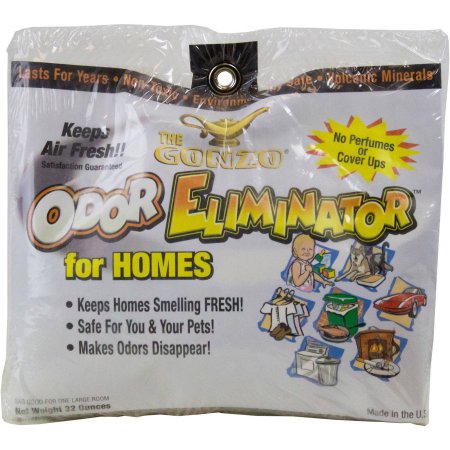
In addition to using things like baking soda, vinegar, green products and products made with essential oils like my litter box deodorizer and the air freshener available on my shop page, another natural and safe deodorizer, Zeolite, is a mineral that absorbs odor even more efficiently than baking soda. Use powder form (such as Odorzout) as you would baking soda. Zeolite pebbles or stones (photo below) can be placed in problems areas and recharged in sunlight. They are available at various online stores as well as places like Walmart and Home Depot.
Zeolite

References: 
Ecocenter.org
EWG.org
Scientificamerican.com
Healthwyze.org
Toxipedia.org
HSPerson.com


Friday, December 9, 2016

Reversing Cancer in Dogs

Yes! This is wonderful news. Check out this state of the art facility outside of Austin, Texas that is a one-of-a-kind sanctuary for dogs that have cancer! They not only treat them and are a forever home if necessary, but they are reversing cancer in some cases with diet and then adopting them out! This is amazing and so exciting!

Watch this short video or learn more by going to their website at Ketopetsanctuary.com

Thursday, January 22, 2015

Pet Hospice Care


I have a lot of experience with pet hospice care not only with our own pets but with clients' pets too. Our last four pets that passed away most recently did so at home under hospice care (as well as many of our other pets), with only one being euthanized (by a mobile vet) due to her severe discomfort. 

Though pet hospice care may not be for everyone, it comes naturally to me. Maybe it just runs in the family, as my mother was a home hospice nurse (for people) for 12 years. She has been a great teacher and means of support for me while my own pets were receiving hospice care. The dying process of pets is very similar to that of humans. 

I have been providing hospice care for my own pets since before the internet was even available, so now it's nice to find different websites and organizations online that are educating and supporting people who are interested in pet hospice care. I have listed the links to a few of them below.

I recently received this wonderful (26 min.) video via email with Dr. Karen Becker, a proactive and integrative wellness veterinarian, and Dr. Ella Bittel, a holistic veterinarian from Germany, discussing hospice care for animals.


Here are some pet hospice websites:

http://www.spiritsintransition.org/index.html

http://pethospice.org/

http://brighthaven.org/animal-hospice/

Wednesday, June 18, 2014

Structured Water


Not only are we a professional and passionate pet sitting service, we are also progressive. We like learning about the newest leading-edge technology, inventions, products, services, discoveries or otherwise -- especially if it benefits animals. When I'm not pet sitting, I spend a lot of my time reading, researching, attending classes, workshops, and seminars about pet related subjects as well as other subjects.

We live in an exciting time right now. There are new discoveries and inventions every day. Most of which you don't hear about in the main stream media. Things are constantly changing and evolving. One of these exciting new things that I discovered over a year ago is Structured Water (SW). 

It wasn't until recent years that an inventor by the name of Clayton Nolte, after researching and working with mathematics, physics and the properties of water for forty years, invented a device that mimics nature and creates structured water -- the way water was intended to be and is supposed to be; the way nature creates water. It's water that has a different molecular structure.


After learning about and using this water myself, structured water has become another passionate subject of mine! And so to explain it in detail I created a whole page on this blog dedicated to just that. Please click on the structured water tab at the top of this blog for much more detailed information.

I have not only been drinking and showering in it for over a year myself, but so have other family members, our pets and our plants. If you are a client and I have pet sit for you within the last year, your pets received structured water while I was pet sitting. This is where I really notice the change. Animals don't have any judgments, beliefs or thoughts that get in the way of experiencing. They just know that once they get a drink of this SW, they really like it! What I have observed so far is that in the beginning, the animals seem to drink more water, but only at first. Once they get properly hydrated -- probably the best they have ever been in their entire lives -- then it tapers off to drinking less water, or normal amounts. They tend to feel better and have more energy. They seem to become more communicative as well. These aren't dramatic changes, they are more subtle. (I am able to pick up the subtleties. I have seen the difference it makes in people and plants too!)

People that are more sensitive to energies that start drinking it notice the energetic difference in the structured water compared to other water.


Unfortunately, once the pet sitting assignment is over and the pet's water gets changed out, the structured water goes away. This makes me sad because I want all pets to be able to always have SW. This is why I have written about it in great detail so that more people become aware of it and can get it for themselves and their pets. Awareness is everything. I am doing what I can to get the word out (along with others). I want every person and every pet to have and to experience structured water! Order your water structuring device by clicking here. You'll be glad you did! (You'll also get four free bonuses with your order while supplies last!)


Saturday, May 10, 2014

Indoor Air


Along with water being essential to all of life, air is another basic essential element. I have noticed many people do not give much thought to the indoor air they are breathing. Being a pet sitter, you might think I'm talking about pet smells, and sometimes that can be a problem, but I want to talk about other air pollutants -- ones that are maybe not so obvious.

I'm sure you've heard how even as polluted as our outdoor air may be (especially in the cities), indoor air is even worse. Studies done by the EPA indicate that indoor levels of pollutants may be 2 to 5 times – and occasionally more than 100 times – higher than outdoor pollutant levels. Indoor air pollutants have been ranked among the top five environmental risks to public health. The problems they cause can be subtle and don't always produce easily recognized or immediate impacts on health. 

For instance, if you have cats you know that cat litters are not created equal. Some brands, especially the less expensive brands are so incredibly dusty that if I just gently scoop the box while wearing my contacts, I have to take them out to rinse them off afterwards because they get coated with a layer of dust. If I wear my glasses, I have to wipe them off as well. You can see the dust as it settles on everything nearby. If you have to add litter: pour and run for air -- from the huge cloud of dust! Now I hate to think about all that cat litter dust that I have inhaled into my lungs over the years. I have used some of these excessively dusty brands in the past myself. It's worth the extra money not to have to inhale so much dust. As a pet sitter, I have experienced just about every kind of cat litter imaginable over the years. They are continuously coming out with new ones too. I mean, have you ever seen so many kinds of cat litter? 

I buy the least dusty scoopable cat litters I can find that are unscented. So far, I've found Dr. Elsey's Cat Attract or Precious Cat scoopable cat litter to be one of the least dusty (99% dust free and it's true!) that works well and doesn't have any odors. I recently received an advertisement for another new 99% dust free litter so I'm sure there are more, I just haven't tried them all. Cats' sense of smell is more sensitive than ours and I know being sensitive to odors and chemicals myself, that if a cat litter's scent is over bearing to me, it surely is overwhelming to the cat. Cats prefer the closest thing to what they would naturally use, which is dirt or sand. Now I'm not saying use dirt (although I think the cats would appreciate it). I'm saying dirt doesn't smell like all these over powering scents they add to the litters to appease us. The cats are the ones who have to use it. Scratching around in dirt doesn't give them a lung full of dust either. Buy litters that have the least amount of dust. Not only are the cats breathing it in, so are you and I. Cats get the dust on their fur and end up licking it off as well. If you buy scented litter, try buying unscented and using baking soda instead. The cats will appreciate it, and so will I.

While writing this article, I had a client whose cat developed a cough. After being checked out by a veterinarian and unable to find a cause, it occurred to my client that maybe the cat litter dust was the culprit. A couple of weeks after changing to a much less dusty cat litter, my client noticed her cat's cough not only got better but it's almost completely gone.

Sometimes the cleaning products that are used in homes can be harmful to breathe for us and our pets. Do you use environmentally safe cleaners in your home? If you use a housekeeping service, do you know what cleaners are being used around your pets? When we have pets we have to be more conscious of the products we use around them. Pets are always closer to the ground where everything in the air settles. Plus, their sense of smell is way more sensitive than ours. Cats sense of smell is around fourteen times greater than ours, while a dog's is 10,000 to 100,000 times as acute. I have experienced walking into homes after housekeeping has been there and the smell of cleaners is so powerful, it's nauseating. I know it also has to be for the animals. 

Remodeling projects are another powerful culprit of noxious fumes. Keep pets out of these areas and be sure to air the rooms out with fresh air as much as possible until all the fumes are gone before allowing them back in those areas.

Of course if you have birds, all the above can be deadly for them. Not to mention other things that can be deadly to birds such as using non-stick Teflon coated cookware. You have to be extra careful what is used around birds. They are the most sensitive. I stopped using Teflon (or similar type) coated cookware years ago. If the fumes kill birds, what is it doing to us? 

The biggest indoor air problem for me has become commercial air fresheners. In an effort to mask or prevent unpleasant odors inside their homes, or just to smell a pleasant aroma in the environment, people are inadvertently filling the air in their homes with toxic chemicals. Our home is where we spend the majority of our time, other than at work -- if you work outside the home. I have the benefit of working from home, and so all my time is spent at home, outdoors or in other people's homes. 


There are so many kinds of air fresheners these days. There are ones that plug in and even battery operated ones that spray every few minutes automatically. I have walked by them and been sprayed. I have seen them placed so that the spray lands in the pet's bowls or the pets themselves get sprayed. We really have gotten carried away with air fresheners. I have become more sensitive to them and can usually smell if there is one air freshener in the house. When people have multiple air fresheners, it is overwhelming and I can't stay long without starting to get a headache. Is it any wonder? If people knew what these commercial air fresheners actually contained and what studies have been done, or lack thereof, on the effects to our health, I don't think they would continue buying them. The majority of them contain toxic chemicals. Do you use commercial air fresheners? See how the ones you use rate when tested by EWG (Environmental Working Group) by clicking hereHere you can also view what products are safer and received an “A” rating and would be healthier alternatives.


The problem is a lot of people don't think about what they are putting in their air (or on their skin, or in their body) or their pet's. So if this article makes just one person be more consciously aware of the products they are buying and putting into their indoor environment -- the air they breathe, and the air their pets breathe, and that I breathe -- then it has served its purpose. There are other alternatives to using toxic commercial air fresheners and toxic cleaning products. There are healthier products available now than ever before and there are more resources for finding them. Even the city we live in gives us a page full of recipes for alternative homemade natural cleaners when they deliver our garbage bags. Here are some helpful tips on improving the quality of your indoor air.

Before starting our pet sitting business, my husband and I both worked for many years in the air conditioning wholesale industry. We are not only familiar with, but also sold the many products and equipment available to help clean and improve your indoor air quality, like electronic air cleaners, filters, ion generators/ozone transmitters and other products. There are things you can use to help clean your indoor air without using toxic chemicals.

We are inundated with chemicals, pollutants and toxins everywhere we turn -- in our foods, our pet's foods, our water, our earth, our bodies, and in our air. Even a significant percentage of pregnant women's breast milk, placentas and umbilical cords have been tested and found to have many chemicals in them. Isn't it time we became more conscious of the products and foods we are using and consuming? And those we are exposing and giving to our animal friends as well?


One alternative to chemicals I have enjoyed for the last twenty years or so are essential oils and essential oil products. I used to make essential oil products as a side business before I started my pet sitting business. As I got busier with pet sitting, I drifted away from that; but in the last couple of years, I've gotten back into it again. There has been a lot of progress made (and continues to be made) with studies done in the area of essential oils and pets, which I'm really excited about. I am proud to own the first of its kind -- The Animal Desk Reference for Essential Oils for Animals written by holistic veterinarian Melissa Shelton, which was just published in 2012. (More on this later!)

 I use H2EO Ultrasonic Diffusers in our home for diffusing essential oils and have for years. I love them! Click here for a short video to see how the H2EO Ultrasonic Diffuser works. Not only are essential oils safe if used properly, they have many therapeutic benefits. I use essential oils from Young Living Essential Oils. (This is the brand recommended and tested by Dr. Shelton.) 

I also recently made my own essential oil air freshener. Not only is it completely natural and safe for you and the environment, it's safe for use around pets! Go to our Shop page to read more about it or to purchase some for yourself using PayPal, the secure and easy way to shop.

Note: If you're a current client and would like one delivered on our next pet sitting visit, please click on the local pick up only button and note your request with the order. (If you prefer not to use PayPal you can email us your order.) Thanks!


PayPal Logo


Monday, April 28, 2014

Dog Chews


There are so many choices when it comes to dog chews or bones these days. Some can be a serious choking hazard. There have been several occasions over the years where we pulled dog chews out of the throats of choking dogs. Some dog chews may also cause intestinal blockages if large pieces are swallowed, while others can be a dental hazard and fracture teeth. Which ones are the best for your dog? Dr. Karen Becker, DVM offers us great advice on how to choose the right dog chews or bones for our dogs in these two short videos.


Tuesday, March 18, 2014

Feed Your Way to a Healthy Pet

(Note: An updated version of this article can be found on the Pet Foods tab at the top of this blog.)

Thirteen years ago, before I started my pet sitting business, I began reading about and researching what it takes to keep our pets living long, healthy and happy lives. Animals and especially dogs and cats, are a passion of mine and have been since I was a child. 

Now, after pet sitting professionally for many years and with what I've observed with my client's pets and my own pets, in addition to the books, videos, classes and research, I have noticed some common trends between what pets eat and the illnesses they tend to get.

First of all, we need to remember that well-being is our natural state as well as our pets' natural state of being. We/they are meant to be healthy. The problem is, there are not as many pets in their natural state of well being any more (as with humans). Why? For several different reasons but it's the same reasons for pets as it is for us. One of the major culprits is what is put into the body. The majority of pets are over weight and/or sick and on medications, or are destined to become ill after continuously consuming diets that contain ingredients that are known to be not just unhealthy, but cause illnesses and diseases. Things have gotten totally out of hand. We need to get back to the basics of what it takes to be and remain in our and our pets' natural state of well-being. We have to be more conscious of what we are doing and the every day decisions we make. 

Nutrition is just one facet of a holistic approach to health, but it's an important and fundamental basis. The more I learned about pet nutrition and what the ingredients actually are in most commercial pet foods, the more disturbed I became. Each time I learned about an ingredient I didn't want my pets to consume, I would change the foods I bought for my own pets accordingly. I learned how to read labels and choose pet foods based on the quality of ingredients, not based on the name, the packaging or the advertising. These big pet food companies have plenty of money to spend on convincing you to buy their products

Just like with my own diet and the food I choose (or not) to put in my body, given what I know, I got more selective and particular on what I buy and feed my pets. I see more and more people doing this. (And remember, you make a statement with every dollar you spend!)  This is why the larger pet supply stores started stocking more higher quality foods, (where I live Petco stocks more of a selection than Petsmart) and why the smaller natural pet supply stores like Natural Pawz are growing like crazy. There's another natural pet food store that just opened here locally in Houston called Kriser's. I stopped by the other day and they said business has been really good. These types of stores will only grow in popularity as more people become more pet food savvy.

Another reason you need to read the ingredients is because everything nowadays is labeled "natural" and yet it could be the farthest thing from natural. These short funny video clips from OnlyOrganic.org explain what I'm talking about. You can't count on government agencies such as the FDA to protect your pet from harmful ingredients (or you!).  Here is a slide show of ten of the most ridiculous ingredients or regulations that are allowed in pet food.

I wrote about a few of the books that I have read on the subject of pet food  back in 2010 and 2011, such as Food Pets Die For; Shocking Facts About Pet Foods by Ann N. Martin, Not Fit for a Dog! The Truth About Manufactured Dog and Cat Food written by three veterinarians, and Buyer Beware - The Crimes, Lies and Truth About Pet Food by Susan Thixton. More people are speaking up about pet foods than ever before. Here is a recent article by a canine nutrition expert.
Another great resource on choosing better quality pet foods is Susan Thixton's website TruthAboutPetFood.com. There, she has a lot of helpful information and she keeps up with all pet food or treat recalls. She has done so much research and work on her wonderful pet food review database PetsumerReport.com, which for less than $18 a year, you can have access to reviews on over 2,500 pet foods and treats! Get the nitty gritty on what's in your pet's food! She makes it easy! She adds new ones every month so it's always growing. A great resource and well worth the money! 

Susan is our crusader when it comes to demanding healthier and safer pet foods. She holds advisory positions on two AAFCO (Association of American Feed Control Officials – those that develop pet food regulations) committees – the Pet Food Committee and the Ingredient Definitions Committee.  She and fellow pet food safety advocate Mollie Morrissette (of PoisonedPets.com) and Dr. Jean Hofve, a holistic veterinarian, founded the Association for Truth in Pet Food – a pet food consumer advocacy group of which I am a proud member.  They are working towards developing regular meetings with the FDA. They have made great strides already. As a life long pet lover and parent as well as a pet sitting business owner and advocate for better pet foods, I am grateful for all their hard work and determination!

For the dog lovers, I have also previously written about another wonderful resource on natural dog care, training and nutrition called The Whole Dog Journal. Every year they give their list of the best rated dog foods based on quality ingredients (and they explain what their criteria is). They even go so far as to visit the manufacturing plants. Though they only deal with dog foods, you can get a good idea on the brands that are better quality for cat foods as well.

One of my favorite holistic veterinarians, Dr. Karen Becker, has excellent advice and tips on the best and worst pet foods to buy and on feeding cats in particular, in these short video clips. She also has great advice on how to shop for healthy pet foods and talks about the ingredients in the foods. Though she doesn't mention GMO ingredients (see below), she does bring up other subjects I discuss later in this article such as what exactly certain ingredients like "meat meal" consist of, and about staying away from treats made in China. These are excellent videos!

When you have forty minutes, this video taped conversation between Dr. Karen Becker, Dr. Joseph Mercola and Dr. Barbara Royal, President of the American Holistic Veterinary Medical Association (AHVMA), is full of little pearls of wonderful advice and guidance on how to improve the health of the animals in your life. 

(Special Note: You may have seen Dr. Mercola on Dr. Oz's television show. He has been on several times. I am a big fan of Dr. Mercola, who is controversial. Thanks to him I was made aware of a cure for basal cell carcinoma which was discovered by a cancer biochemist, Dr. Bill Cham in the UK.  I cured not one, but two basal cell carcinomas on my face without surgery by using Curaderm (along with thousands of other people), a cream that contains BEC5, which is the compound that actually seeks out and destroys cancer cells such as basal cell carcinoma, squamous cell carcinoma and keratoses without harming healthy cells. More than likely, you won't hear about this from your dermatologist. Mine knew nothing about it and didn't seem too interested in learning. (It means no profit for her or the surgeon she refers me to.) You can read more about this in his book The Eggplant Cancer Cure. Though it's written by a scientist, it is very easy to read and contains a lot of photos. Learn more about Curaderm here. Someone else who has used Curaderm made a documentary video to share here.I just had to mention this. Now back to pets....

What I also love about Dr. Becker is she openly discusses the fact that veterinarians don't know much about dog and cat nutrition. Shocking? Did you know that many nutrition courses offered at U.S. veterinary schools are not taught by nutritionists… they're taught by representatives of major pet food companies? It's obviously a major conflict of interest, and as a result most veterinarians graduate without having any unbiased nutrition information. This is why your veterinarian may have told you to only feed your pet a certain "prescription" diet, or to avoid offering "people food" (even if it's healthy, species-appropriate food for your pet).  Dr. Becker states "Veterinarians are graduating totally incompetent and unable to effectively talk about foods outside of what they learned from pet food manufacturers. If they did receive any nutritional counseling, it was archaic…" They are graduating not only with a lack of knowledge about pet nutrition, but also with a skewed perception of what whole nutrition really means." She goes on to say "Veterinarians, oftentimes, become pretty defensive – as do medical doctors – when they're confronted with these issues, because they don't have enough knowledge to be able to confidently defend their position. They weren't given a whole lot of nutrition training."  

This is sad but true. Just as our medical doctors aren't trained in nutrition and how to stay healthy, neither are veterinarians. They are taught and trained in and know about illnesses, diseases, (and how to treat them medically) and medications. (We have disease care systems -- not health and wellbeing systems.) Don't get me wrong -- I love doctors and veterinarians! I am grateful we have them. We need them and they have their place. But they were not trained in what it takes to prevent these problems to begin with and the basis of health and wellbeing begins with diet, and what substances go into the body. The body -- whether human or animal -- is the sacred, temporary vehicle we are given through which the soul experiences this life. Isn't it time we became more mindful of how we treat our bodies -- animals included?

Another issue I have in this regard is the fact that pet parents often look to their veterinarian to recommend a food for their pets, especially when they develop an illness. Veterinarians only sell prescription foods. The same companies that make these prescription foods are the same companies that give them their training in nutrition. I think that's a little biased, don't you? I know I am not the only one who has a problem with this.(Click here for another article on the same subject written by Susan Thixton.) One pet food consumer shared some interesting information she found regarding this subject as well, and asks the question: Is this ethical? In my opinion, no -- I don't think it's ethical. We're not talking about office products here. We're talking about the foods our beloved pets eat every day. 

Most, if not all holistic veterinarians that are educated in nutrition do not recommend prescription diets. On Dr. Becker's list of best to worst pet foods for example, prescription foods were number 8 and 9 out of 13 -- 13 being the worst. These special diet foods contain ingredients you want to avoid. Most pets do not like prescription foods. That should tell you something. Every time I read the ingredients of these foods that pets are forced to eat day after day, I cringe. Corn is a major ingredient in the ones I typically see. Corn is GMO. Not to mention its an allergenic. How are carnivores supposed to thrive on primarily a grain, especially when that grain is genetically engineered and has shown to wreak havoc in animal's bodies? It's madness.

One of the biggest problems in the majority of the commercial pet foods these days -- of which the symptoms are usually subtle and progressively get worse over time -- is the same big problem we have with our food supply, and that is genetically modified ingredients (or genetically engineered); otherwise known as GMO ingredients. We have only just begun to see the health effects from consuming GMO ingredients. We as humans, along with our animal companions and farm animals, are experiments in the consumption of ingredients that are so far from anything our bodies should consume that when tested and given the choice, even squirrels and birds will not eat such foods. Why? Because animals inherently know what is good or healthy for them. GMOs are anything but natural or good for them or us. They are called frankenfoods for a reason. And if GM crops are causing monarch butterflies and bees to disappear, what do you think these ingredients are doing to your pets, eating them day after day? If you want to learn about what GMOs are all about (if you don't already know), you will have to do your own research because you won't hear what is really happening in your typical controlled media. The powers that be want you to keep consuming their products. They don't even want us to be able to know that these ingredients are in our or our pets' foods. There is a documentary on GMOs called Genetic Roulette. I highly recommend it. Awareness is the key. We can't change anything unless we are first aware of it. I have noticed there are still a large number of people who know nothing about GMO foods. My intention is to spread the word and help educate. "Education-not Medication". The Center for Food Safety has a downloadable True Food Shoppers Guide to Avoiding GE Food and apps as well. Another good resource to learn more about GMO foods is at OrganicConsumers.org.

What foods are GMO? Currently commercialized GMO crops in the U.S. include soy (94%), cotton (90%), canola (90%), sugar beets (95%), corn (88%), Hawaiian papaya (more than 50%), zucchini and yellow squash (over 24,000 acres). Also any products derived from the above, including oils from all four, soy protein, soy lecithin, cornstarch, corn syrup and high fructose corn syrup among others. (Yes, that's right: if you consume sodas that contain high fructose corn syrup -- which most of them do -- you are consuming a GMO ingredient. Not to mention diet drinks, which contain aspartame -- a GMO, neurotoxin and carcinogen!)

Does your pet have any of these problems?:
  • Itchy Skin, Hot Spots, Chewing of the Feet 
  • Ear Infections
  • Gastrointestinal Upset (diarrhea, colitis, irritable bowel) 
  • Vomiting
  • Other Chronic Illnesses (from a weak immune system)
Check the ingredients in their food! (And treats! Don't forget the treats! So many treats are loaded with GMO ingredients and toxic preservatives.) If there is any corn, soy or beet pulp or any ingredients derived from cotton (cottonseed oil) or canola, try slowly transitioning them (over a week's time, longer if needed) onto a grain free food without any of these GMO ingredients. Rice and wheat are not currently GMO but they have their own problems. Dogs and cats do not need grains in their diets. Particularly cats. It's best to avoid them. GMO ingredients wreak havoc on their immune systems among other things. We are doing a great dis-service to the animals by feeding them foods that contain these ingredients (not to mention ourselves). I have witnessed the improvements in my own and my clients' pets (and humans too!) that have been transitioned off of all grains and GMO ingredients. And dogs or cats that are transitioned from dry foods to can foods (at the very least) have remarkable improvements in their health. They need moisture-rich diets.

Does your pet have Urinary and/or Renal problems? This is also another common problem with dogs and cats who eat dry foods. These highly processed, extruded kibble diets are not biologically appropriate for dogs and cats like we have been led to believe (by the pet food companies). They contain nowhere near the moisture levels of these animals' natural prey or what they need to be consuming. In fact, they are so devoid of necessary moisture that some pets become chronically dehydrated and are more prone to urinary tract problems, especially cats. Cats need a diet high in moisture and they are not naturally big drinkers. Our pets need diets closer to 70% moisture and dry food is 10 - 12%. Not even close. (Another problem is cats can become addicted to the additives in some foods, including dry foods.)

Other ingredients that you want to avoid are artificial colors, flavors, sweeteners and preservatives, especially those known to be carcinogens such as  BHT, BHA, ethoxyquin and propyl gallateAlso walk away from formulas containing by-products, especially those that don’t specify the type of meat in the meat by-product. Believe it or not, meat by-products – especially those not specified as a certain kind of meat – will contain parts of beaks, feathers, feet, hooves, hair and even tumors that have been ground into the mix during processing. Although some by-products may provide some nutrition, such as spleens and other organ meats, because they are all lumped together it’s best to avoid them.

Another big huge (disgusting!) problem with some ingredients are they could (and do) include euthanized cats and dogs. No, I didn't make this up. (read more about this here) According to the FDA: "There appear to be associations between rendered or hydrolyzed ingredients and the presence of phenobarbital in dog food. The ingredients Meat and Bone Meal (MBM), Beef and Bone Meal (BBM), Animal Fat (AF), and Animal Digest (AD) are rendered or hydrolyzed from animal sources that could include euthanized animals." ( as stated on their website here.) Yes -- that includes dogs and cats that are euthanized in shelters. If that doesn't make your stomach turn, I don't know what will. (Dr. Becker talks about this in one of her videos about pet foods, which I link to above.)

As you will discover, a large proportion of the foods available (and treats!) have one or more of the ingredients listed above (in bold) to be avoided. Some of the foods are full of these ingredients. But by being an educated and informed pet guardian and selecting your pet's food based on quality ingredients, you can make all the difference in the world in your pet's health and wellbeing. Give it a try and see for yourself. A  lot of times people see an improvement within just a few weeks. And believe me, I know that cats in particular can be very finicky and difficult to transition onto better foods. They will refuse to eat if they don't like something and that isn't good either. Don't play hardball with a cat. (It took me almost a year to transition a picky cat from dry to can food.) You have to have patience, persistence and remember that they depend on you to know what's best for them. Our animal friends can't read the ingredients, but you can. Their only choice is what you give them.

When considering foods containing fish, look for manufacturer assurance on the label (or on their website) that states the formula contains NO artificial preservatives (like ethoxyquin which is frequently used in fish). Look for foods preserved with vitamins E and C, often called tocopherols instead. Another thing is that some fish (especially tuna) is contaminated with mercury. You may think it's just a small amount but think how small the animals are and if they are eating fish on a regular basis....not a good thingEven the U.S. Food and Drug Administration warns against excessive tuna (and other fish) consumption due to mercury contamination. Farmed fish are fed genetically engineered food. Not only that, but genetically engineered fish may soon be heading to the market. Get your downloadable Guide to Avoiding GE Fish here.

Another good reason to avoid feeding fish to your cats is because in a recent study of 112 different cat foods, which included over-the-counter and prescription foods in cans, pouches and dry formulas, it showed dramatic fluctuations in the iodine content in the foods. These results suggest the inconsistency in iodine concentrations may lead to development of clinical hyperthyroidism, especially in cats that are first fed iodine-deficient diets, and then later in life are fed diets containing excessive iodine. It's impossible for one to know if the iodine in the food is in a balanced proportion or not. Not to mention that seafood is a very rich source of iodine and cats aren't designed to process a lot of iodine. (Besides, seafood is not a natural food for cats.) Soy products have also been linked to thyroid damage. Studies have also linked PDBE's (flame retardant chemicals) in house dust to the growing problem of thyroid disease.

If all that I have mentioned isn't enough, it has been discovered that the high heat processing that occurs in the manufacturing of dry kibble actually creates two carcinogens -- acrylamide and heterocyclic amines. These won't be listed in the ingredients of the food of course because it is created in the process itself and is not an ingredient. That's just great, isn't it? The very process of making dry pet foods creates carcinogens in the food that the pets are consuming. They call them carcinogens for a reason  -- they cause cancer. And without dragging this post on for several more pages about the details of what these are and the studies that have been done (or not), I'll let you do your own investigation if you'd like further information on the subject. Knowing that dry foods contain carcinogens and that carcinogens are known to cause cancer and seeing all the pets I see die of cancer....well, that's enough for me.

Remember those dog jerky treats that were made in China and were just recently pulled from store shelves after killing 600 dogs and making many more ill? You know -- the same treats they have been investigating for the last seven years with still no answer as to what the cause was. Well, guess what? Those same treats are coming back to the store shelves. In fact, they are probably already there. What's changed? Nothing. They can't even figure out what about them caused the deaths and illnesses of thousands of dogs. Here are some tips on avoiding toxic pet treats from Dr. Becker. My advice is (and has been) do not buy any treats that are made in China. You have to read the packing. It's usually in small print at the bottom.

(May 1, 2014 - Update on jerky treats from China: Over the past six months (since October 2013) the FDA has received reports of an average of 6 sick or dying pets a day related to jerky dog treats imported from China.  This means approximately 1200 more pets have become sick or died linked to jerky treats imported from China in just the last six months.  When will this madness end? Read more about this here.)

(Aug. 29, 2014 - Update with some good news regarding the jerky treats. As of May 1, 2014, the FDA has received reports involving more than 5,600 dogs and 24 cats, and included over 1,000 dog deaths -- all linked to chicken, duck, or sweet potato jerky treats imported from China. Three humans, two of them children, also became ill after ingesting the treats. The good news: Petco and Petsmart announced they will no longer sell treats made in China! Woohoo! Finally! This will take effect at the end of this year for Petco and in March 2015 for Petsmart. Send them a "thank you", will you? Read more about this here.)

Although I link to and mention Dr. Karen Becker, a holistic veterinarian in Illinois, most frequently in a lot of my writings including this one, she is not the only source that I get my information from. It's just that she has made sharing information easy because she writes articles and posts videos frequently and they are easily found for reference on healthypets.mercola.com

This article is full of links to more articles and information and resources. I hope you will come back and check them all out and become a more informed pet food consumer. At the very least, I hope you will watch Dr. Becker's videos about pet foods and the documentary Genetic Roulette (links above). You and your pets can only benefit from it.

Our pets are living, breathing, sentient beings who depend on us for their care. Just like us, the foods they ingest play a major role in their health and wellbeing. For decades we have been dumping highly processed, dry foods in their bowls as we rush about our busy lives. It's convenient and we have been led to believe it's what our pets need to be healthy. Now, just like with the human population, we have created a population of sick and overweight animals. It's time to rethink what we are feeding our beloved pets if we want to keep them healthy and around as long as possible. Nutrition and diet is the foundation. You CAN feed your way to a healthy pet!

Don't think you can afford to feed better quality foods? Better think again....it's either spend the money on the food now or spend the money at the vet's later, plus at the cost of your pet's health. If you actually sat down and figured out how much a day it would cost you to feed a better food versus how much it will cost if your pet gets one or more illnesses (as listed above) due to what he/she is consuming on a regular basis, you may be surprised. Not to mention your pets will be healthier and happier. Just move up one place on the pet food scale if that's all you can do right now, as Dr. Becker describes in her video. It's the difference between thriving and surviving. It's about prevention. There is truth in the old saying: An ounce of prevention is worth a pound of cure. We have lost sight of what it takes to (reclaim and) maintain our and our pets' natural state, which is health and well-being. Instead of taking a medication for every and anything......as Hippocrates wisely said "Let Food Be Thy Medicine and Medicine Be Thy Food".

Update (4/25/14): In a new article by Dr. Becker titled Five Health Tips for A Long-Lived Pet , she offers excellent advice on how to not only extend the quantity of your pet's life, but also the quality. 

Update (5/19/14): Recently, one of the best studies that has ever been done to document the dangers of GMO foods revealed significant information. Of course, this study was not done in the U.S.


Update (5/23/14): Exciting news! Susan Thixton of TruthAboutPetFood.com began a campaign (in April)  to raise $10,000 to start testing pet foods for dangerous toxins. I've had the thought of...if only we had our own lab and scientists to test pet foods ourselves! Well, that's exactly what's happening! Pet food consumers (including me) have banded together and not only raised the $10,000 rather quickly, but surpassed that amount and it is continuing to grow. Won't you join us in our great cause? Go here to learn more.

Update (6/23/14): "A commercial pet food company in Canada recently produced a "white paper" titled The Biologically Appropriate Food Concept and the Dietary Needs of Dogs and Cats. While white papers produced by businesses are typically informational marketing pieces, this report contains a lot of good information that can be very useful for pet guardians interested in understanding their dog's or cat's nutritional needs" says Dr. Karen Becker. I have to agree. You can download the full report and read more about it here.